
Nara - Baby & Mom Tracker
Nara OrganicsParenting
3.01.87K Reviews
- Version
- 2.9.0
- Installs
- 100.00K
- Age Rating
- Everyone
Screenshots
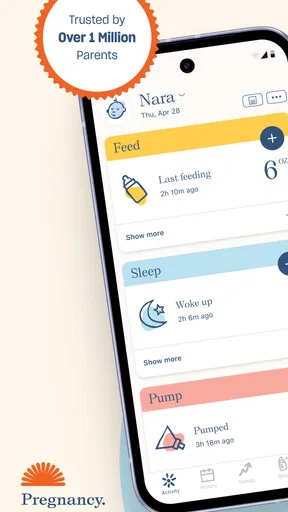
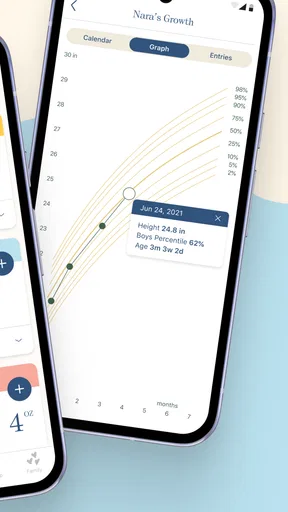
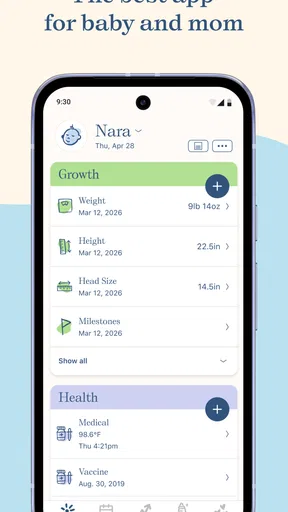
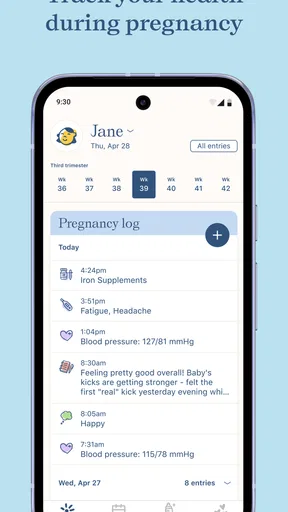
Our Review of Nara - Baby & Mom Tracker
 Analysis by Appyee
New parenthood rarely feels like one neat task. It is a chain of small events: a feeding, a diaper change, a nap that started later than expected, a question for a partner, and perhaps a note about how you are feeling after birth. Nara - Baby & Mom Tracker is designed for that messy reality. It is a free parenting app from Nara Organics that brings baby care tracking and postpartum health notes into one place instead of scattering them across memory, paper, messages, and separate apps.
I found its main appeal less in any single record and more in the complete workflow. You begin with a tired parent trying to remember what happened, enter a quick update, use that information during the next handoff, and later look back for a clearer picture. That sounds simple, but simplicity matters when one hand is holding a baby and the other is trying to operate a phone. The app is available to everyone in its age classification, and its focus is practical rather than entertaining.
From a tired memory to a usable daily record
The starting condition for using Nara is usually familiar: you need to know what happened recently, but the day has blurred together. Was the last feed before or after the nap? Which side did you use? When was the last diaper change? Did the baby wake because of hunger, or was the sleep already unsettled? A tracking tool cannot answer every parenting question, but it can reduce the amount of guessing involved.
I especially like the idea of opening one app for several connected parts of the day. Feeding, sleep, diaper changes, pregnancy information, and postpartum health all belong to the same household routine, even though many alternatives separate them into different products. Keeping those notes together can make the record easier to understand, particularly when a partner or another caregiver takes over.
The developer, Nara Organics, has kept the product identity clear: this is a parenting app, not a social network, baby-content magazine, or medical diagnosis tool. That distinction is important. I would use it to organize observations and prepare better conversations with a healthcare professional, but I would not treat an entry as a diagnosis or use the app as a substitute for urgent medical advice.
The first setup should match your actual routine
My advice is to begin with only the events you genuinely expect to record. New parents often try to document everything immediately, then abandon the habit because every update feels like paperwork. Start with the information that solves a real problem in your home, such as feeding times and sleep periods, and add other categories once the basic rhythm feels manageable.
This is one of the less obvious trade-offs with any tracker: more detail can be useful later, but too much detail can make recording less likely now. A simple, consistently maintained record is usually more valuable than an ambitious record with large gaps. Nara works best when it follows your household instead of forcing your household to revolve around logging.
A practical day, step by step
Imagine a night when the baby wakes while one parent is already exhausted. After feeding, that parent records the event rather than relying on a vague memory. Later, the baby sleeps, wakes, and needs a diaper change. Each update creates a small piece of the day. By morning, the record is not a perfect scientific account, but it is more reliable than trying to reconstruct the night from fragments.
The useful habit is to record close to the event, not at the end of the day. Delayed entry creates two kinds of friction: you may forget the time, and you may confuse one event with another. If you cannot use the phone immediately, a quick spoken reminder or paper note can act as a temporary bridge, but I would transfer it into the app as soon as practical.
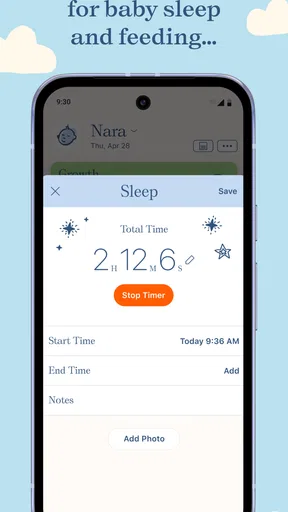
For feeding, the value comes from seeing the sequence rather than obsessing over one isolated entry. A parent can look back at the spacing between feeds and discuss a pattern more clearly. Sleep records can be read alongside feeding and diaper information, which is more useful than viewing sleep as a disconnected number. The same combined view can help during a conversation with a partner who was not present for every event.
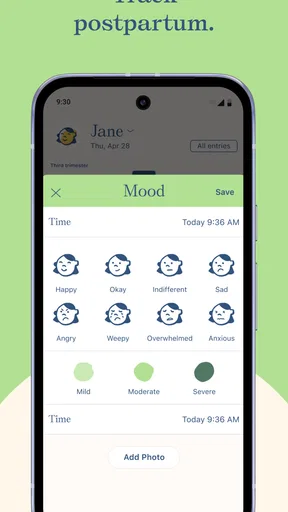
There is also a useful workflow for postpartum health. Instead of keeping the mother’s recovery in a separate notebook while the baby’s care lives in the app, Nara gives both parts a place in the same parenting routine. That does not make recovery less demanding, but it can make it harder to overlook. I would use those notes to notice what deserves attention and to prepare questions, not to judge whether recovery is “normal” based on an app screen.
Handoffs are where a tracker earns its place
The strongest everyday use case is the handoff between caregivers. Suppose one parent handled the early morning while the other slept. A short look at the recent record can answer practical questions without waking the resting parent or starting a conversation from scratch. The same applies when a grandparent or another trusted caregiver takes over for a few hours.
This does not remove the need to communicate. A record tells you what was entered; it does not automatically explain that the baby seemed unusually unsettled, that the parent is running on very little sleep, or that a routine changed because of an appointment. I would treat Nara as a shared reference point, then add the human context verbally.
A helpful handoff method is to review the latest entries together and identify what still needs attention. For example, the incoming caregiver can check the most recent feed, sleep period, and diaper change, while the outgoing caregiver explains anything unusual. This prevents the common mistake of assuming that a timestamp contains the whole story.
For households with different schedules, the app’s value is cumulative. One person may enter most daytime updates, while another checks the record at night. The benefit is not that both people must log every event; it is that responsibility can move between them with less uncertainty. That makes the app particularly suitable for parents who want coordination without maintaining a long message thread.
What the record can help you do afterward
The result of consistent tracking is a clearer account of the day. You may notice that a certain transition repeatedly becomes difficult, that naps are being recorded inconsistently, or that the baby’s routine looks different from what you assumed. Those observations can support calmer planning, but they should not become a source of guilt. Babies and postpartum recovery do not always follow tidy patterns.
One concrete tip is to review the record before a pediatric or postpartum appointment and write down the questions that come to mind. This is more effective than scrolling through entries while trying to remember why something concerned you. Bring the relevant observations into the conversation and let the clinician interpret them.
Another is to use the app as a memory aid during stressful nights, not as a scoreboard. If the record makes you feel that you are failing because the routine is irregular, simplify what you track. The best outcome is better communication and recall, not a perfectly complete timeline.
Nara’s average rating is 4.9 from around 6.7 thousand ratings, and it has passed 100 thousand installs. Those figures suggest that the focused approach resonates with many parents, although popularity does not guarantee that its workflow will suit every family. In my view, the app’s real test is whether it reduces repeated questions and forgotten details without adding another burden.
How it compares with the usual alternatives
The most common alternative is doing nothing beyond memory. That costs nothing and requires no setup, but it breaks down quickly when sleep deprivation, multiple caregivers, or several daily events enter the picture. Nara offers a structured middle ground: more reliable than memory, but less formal than a spreadsheet or a detailed paper journal.
Another alternative is using separate apps for feeding, sleep, diapers, and postpartum notes. Specialized tools can be attractive when you want one category handled in great depth. The drawback is switching between products and losing the connection between events. Nara’s advantage is the combined parenting workflow, especially for someone who wants baby care and the mother’s recovery considered together.
A paper notebook has its own strengths. It is fast, flexible, and easy to hand to another person. It can also capture comments that do not fit a preset field. I would choose paper over Nara for a caregiver who dislikes phones or wants free-form notes above all else. The app is better when you want a searchable digital routine that can be checked repeatedly during the day.
Generic notes and calendar apps are another reasonable choice for very light tracking. They may be enough if you only need occasional reminders. Nara becomes more appropriate when repeated parenting events need a consistent home and when postpartum information belongs beside baby-related records rather than in an unrelated notes folder.
Where the workflow starts to break
The central weakness of tracking is the effort required at exactly the moment when effort is hardest. A parent may forget to log an event, enter it later with an inaccurate time, or decide that opening the phone is too much trouble. No app can fully solve that human problem. Nara is most useful for families willing to build a small recording habit; it is not the right choice if any structured logging feels intrusive.
There is also a risk of overinterpreting patterns. A few irregular naps or feeds do not automatically reveal a problem, and a neat-looking history can create false confidence. I would avoid turning the app into a test of parenting performance. Use it to support observation, handoffs, and conversations, while leaving medical decisions to qualified professionals.
Another limitation is that a shared record still depends on shared discipline. If one caregiver records consistently and another never checks, the handoff benefit is reduced. Agreeing on a simple household rule helps: record the event when possible, and mention anything important that a timestamp cannot show.
The app may also feel too narrow for someone searching for a broad parenting community, extensive educational content, or a full family organizer. Its strength is the tracking workflow, not replacing every parenting resource. That focus is a benefit for users who want less clutter, but a reason to look elsewhere for users who expect an all-in-one family platform.
Device details and who should choose it
Nara is free, which removes the biggest barrier to trying it. It was released on January 30, 2019, and the current version is 2.7.3. Compatibility begins with Android 7.0, so owners of older devices should check their system before planning around it. These details matter because a tracker is only useful when it is available on the phone you actually carry through the day.
I would recommend it to expectant parents who want to establish a record before the baby arrives, new parents coordinating care between adults, and families who want postpartum health considered alongside feeding, sleep, and diaper changes. It is also a sensible option for anyone moving away from scattered notes and wanting one parenting-focused place to begin.
I would skip it if you strongly prefer handwritten journals, dislike routine data entry, or need advanced analysis rather than straightforward tracking. I would also avoid relying on it as a medical authority. In those cases, a notebook, a specialized tool, or direct professional guidance may be a better fit depending on the actual need.
After using the workflow as a whole, my opinion is that Nara succeeds because it connects ordinary events that parents experience as one continuous day. The best moment is not entering a single feed or sleep record; it is the later handoff when both caregivers understand what has happened without reconstructing everything from memory.
The app does require consistency, and that requirement should be taken seriously. Start small, record near the event, review entries before appointments, and keep human explanations alongside the digital history. Used that way, this free parenting app can become a quiet practical assistant rather than another demanding task. For parents who want a shared record of baby care and postpartum wellbeing, Nara Organics has built a focused tool that is worth trying.
Privacy and Permissions
See what permissions an app requests and how it handles your data.
- Photos/Media/Files
- read the contents of your USB storage, modify or delete the contents of your USB storage
- Storage
- read the contents of your USB storage, modify or delete the contents of your USB storage
- Wi-Fi connection information
- view Wi-Fi connections
- Other
- view network connections, change network connectivity, full network access, run at startup, control vibration, prevent device from sleeping, read Google service configuration
Verdict
Strengths of Nara - Baby & Mom Tracker
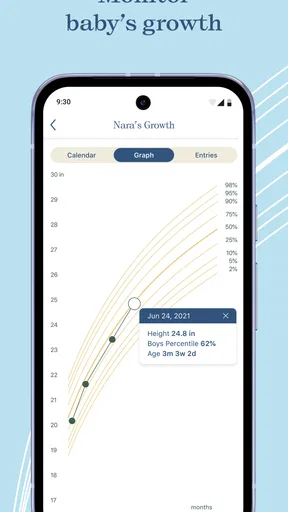
- Tracks feeding, sleep, diapers, pumping, and growth in one place.
- Shared syncing helps caregivers stay updated on the baby’s routine.
- Custom reminders support consistent feeding and medication schedules.
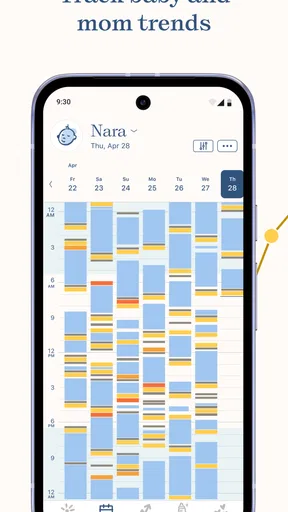
- Simple timelines make daily patterns easy to review at a glance.
- Useful statistics can reveal changes in sleep or feeding habits.
Limitations of Nara - Baby & Mom Tracker
- Some advanced tracking features may require a subscription.
- Frequent logging can feel time-consuming during exhausting newborn days.
- Data accuracy depends on every caregiver recording events consistently.
- The amount of tracking options may feel overwhelming for first-time parents.
- It should complement, not replace, advice from a pediatrician or health professional.
Similar Picks in This Category
View All
Family Space
Motorola Mobility LLC.3.9

شرطة الأطفال - مكالمة وهمية
Oub Apps4.1

Findmykids: Parental Control
LETEM LTD4.6

Pregnancy + | Tracker App
Philips Electronics UK Limited4.8

Policía de niños - para padres
Kids police4.7

Pregnancy App
Amila4.9
Frequently Asked Questions
What is Nara - Baby & Mom Tracker used for?
Nara - Baby & Mom Tracker is designed to help parents record and organize everyday baby-care information in one place. You can track activities such as feeding, breastfeeding, pumping, bottles, diaper changes, sleep, medication, growth, and other routines. It is especially useful during the first months, when several caregivers need a simple way to understand what happened throughout the day.
Can Nara track breastfeeding, pumping, bottles, and solid foods?
Yes. Nara provides tracking options for several feeding stages, including breastfeeding sessions, pumping, formula or expressed-milk bottles, and solid foods. Depending on the activity, you can record details such as duration, side, amount, food type, or notes. This makes the app practical as your child’s routine changes, although parents should still follow advice from their pediatrician.
Can multiple caregivers use the same Nara baby tracker account?
Nara is built with shared caregiving in mind, allowing parents and other trusted caregivers to keep baby information synchronized rather than relying on separate notebooks or messages. Sharing can be helpful when parents divide nighttime duties, a babysitter helps during the day, or a healthcare professional needs a clear routine summary. Review the app’s current permissions and account options before sharing sensitive information.
Does Nara - Baby & Mom Tracker provide medical advice or replace a doctor?
No. Nara is primarily a logging and organization tool, not a diagnostic or treatment service. Its records may help you notice patterns and provide useful information during pediatric appointments, but they should not be used to diagnose illness, determine medication dosages, or replace professional guidance. Contact a qualified healthcare provider if your baby has worrying symptoms or an unusual change in behavior.
Is Nara - Baby & Mom Tracker free, and what should I check before downloading?
Nara may offer core tracking features at no cost, while availability of premium tools, optional upgrades, or subscription terms can change by platform and region. Before downloading, check the current Google Play or App Store listing for pricing, in-app purchases, supported devices, privacy details, and data-sharing policies. Also consider whether the app’s backup and synchronization features match your family’s needs.
